TrueVitals was founded alongside leaders in cutting-edge AI technology, data analytics, and pioneering research in biochemistry and nutritional science from the University of Leeds — then partnered with one of the most trusted laboratory and phlebotomy networks in the UK.
The result is a health intelligence platform where world-class science meets world-class technology. Every report is powered by AI-assisted analysis, informed by leading biochemistry research, and reviewed by a medical professional before release.
TrueVitals is not a reseller. It is a health intelligence platform born from the intersection of three world-class foundations.
Founded alongside leading research in biochemistry and nutritional science from one of the UK's top Russell Group universities. The interpretation framework is built on real academic rigour, not guesswork.
Built by leaders in cutting-edge AI technology and advanced data analytics. The reporting engine cross-references biomarkers across health systems at a depth and consistency that manual analysis cannot match.
Partnered with one of the most established and trusted laboratory and phlebotomy networks in the UK. Professional venous blood draw. Nationwide clinic and home visit coverage.
"The child of leading science, leading technology, and the UK's most trusted testing infrastructure."
TrueVitals controls the entire experience — from the moment you choose a panel to the moment you read your report. We design the panels, coordinate the testing, build the reporting engine, and deliver insight no other service in the UK can match.
Panels designed from biochemistry research — not just a list of markers bolted together.
Nationwide clinic and home visit network. Professional venous blood draw every time.
Partnered with one of the UK's most trusted pathology networks for reliable results.
Cross-system analysis built by leaders in AI technology and data analytics.
Every report reviewed by a medical professional before release. No exceptions.
Your results plus your lifestyle quiz data — goals, symptoms, diet, exercise, stress and sleep — combined for a report that is personalised to you, not just your blood.
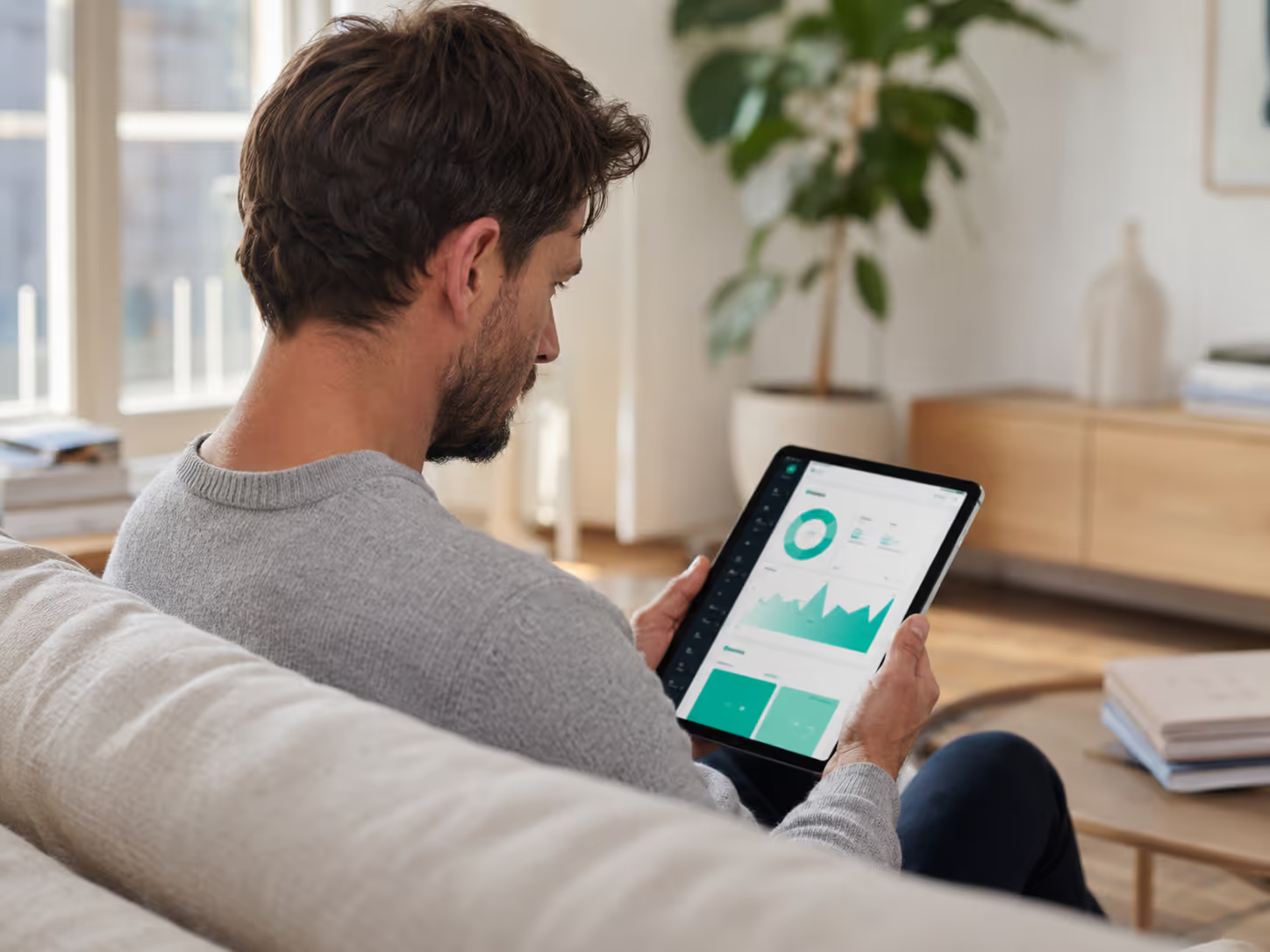
Interactive online dashboard plus downloadable PDF to share with your GP or specialist.
Take multiple tests and watch your data evolve. AI shows how markers shift over time and suggests why.
Your first test gives you a snapshot. Your second test gives you a story. By the third, you have a living, evolving health intelligence system.
With each additional TrueVitals panel, your dashboard becomes more powerful. Our AI and data analytics track how every biomarker changes over time, identify meaningful trends, and provide likely explanations for shifts — whether that is a change in nutrition, training, supplementation, sleep or stress.
This is what separates a one-off blood test from genuine health intelligence. Your data compounds, and the insight deepens every time.

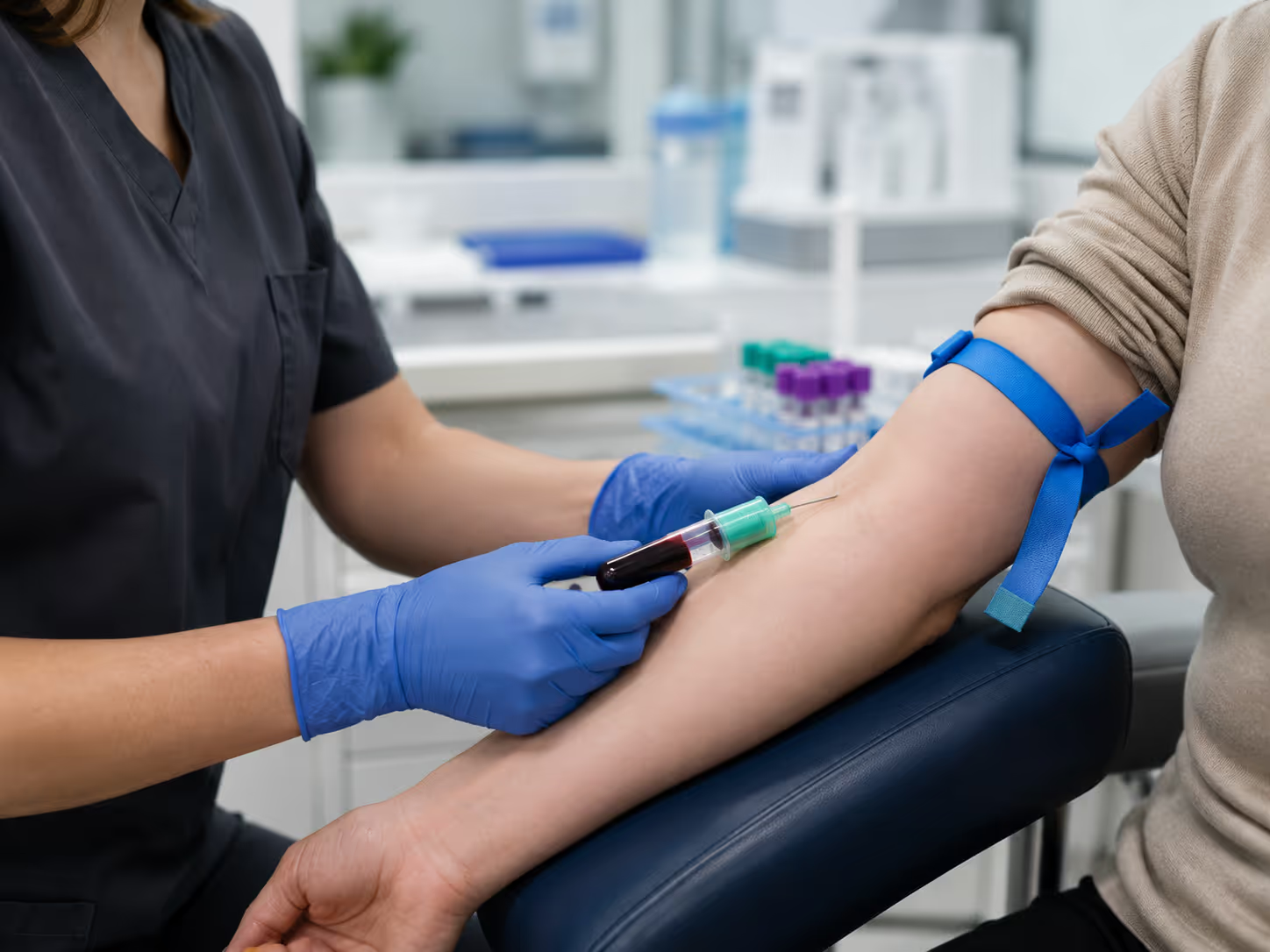
If you are testing 74, 140 or 230 biomarkers, you need a reliable sample. Finger-prick collection produces tiny volumes, is highly prone to contamination and haemolysis, and simply cannot support the kind of comprehensive analysis TrueVitals delivers.
That is why every TrueVitals panel uses professional venous blood draw — collected by a trained phlebotomist at a clinic near you or in your own home. It is the gold standard for a reason.
| Factor | Professional Venous Draw | Finger-Prick |
|---|---|---|
| Sample volume | Large, reliable volume | Tiny — often insufficient for comprehensive panels |
| Contamination risk | Low — sealed vacutainer system | High — exposed to tissue fluid, squeezing, air |
| Haemolysis risk | Low with trained phlebotomist | High — common cause of failed samples |
| Biomarker coverage | Suitable for 230 markers | Limited to small panels |
| Collection | Professional phlebotomist | Self-collected at home |
| Used by TrueVitals | Yes — every panel | No |
TrueVitals was built by technologists and scientists who understood that comprehensive biomarker data demands intelligent, cross-system analysis. The AI engine, the biochemistry research, and the lab infrastructure were chosen and built together from day one.
When you test 140 or 230 biomarkers, the value is not knowing whether each is high or low. The value is understanding how they relate — across hormones, thyroid, cardiovascular health, inflammation, metabolic function, nutrients, liver, kidney and immune markers.
Our AI-assisted reporting engine cross-references your results across every system, identifies patterns that isolated analysis would miss, and structures the findings into clear, personalised insight. It also factors in your lifestyle quiz data — your goals, symptoms, diet, exercise, stress and sleep — layering that context on top of the biomarker analysis to deliver a report that is genuinely personalised to you, not just your blood. Every report is then reviewed by a medical professional before release.
With multiple tests over time, the AI tracks how your biomarkers shift, identifies trends, and provides likely explanations for changes — turning your dashboard into a living health intelligence system.
"Our interpretation framework is informed by leading biochemistry and nutritional science research from the University of Leeds, combined with cutting-edge AI technology and advanced data analytics."
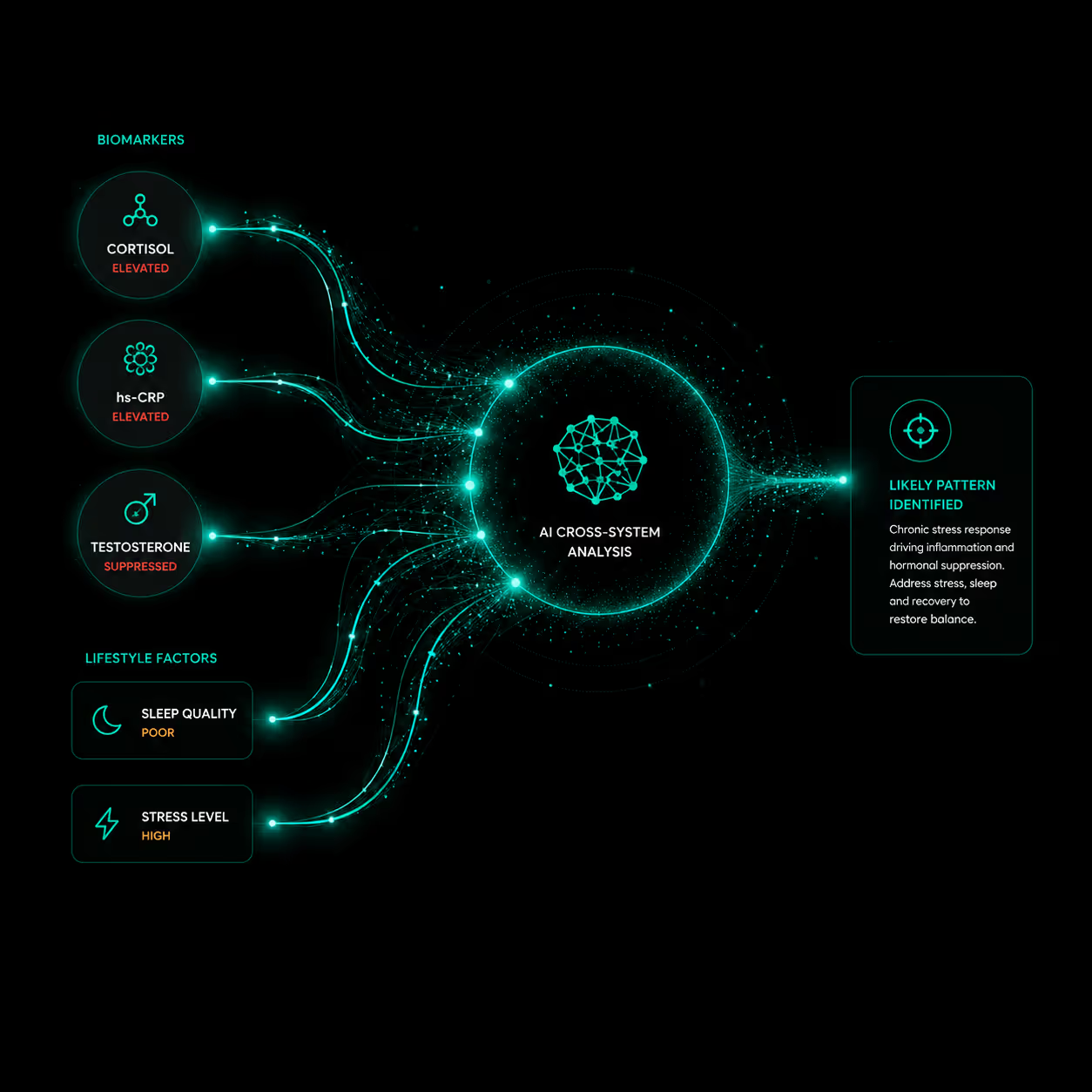
Even the best doctors face a fundamental cognitive limitation with comprehensive blood panels. It is not about skill — it is about the sheer volume of data.
A doctor in a 10-minute consultation cannot mentally cross-reference nearly 10,000 potential pairwise relationships. AI processes every single interaction simultaneously, every time.
Humans hold 5–7 variables in working memory at once. With 140 biomarkers across 10+ systems, the eye defaults to scanning for obvious outliers — missing the subtle cross-system patterns where the real insight lives.
A doctor's interpretation varies with time pressure, fatigue and patient load. AI applies the same analytical rigour to every biomarker, every interaction, every report — without variation, without shortcuts.
A GP seeing you once a year cannot track how ferritin, thyroid, testosterone and vitamin D have shifted relative to each other across three tests. AI remembers everything, across every test you have ever taken.
"This is not about replacing doctors. It is about giving them — and you — a level of cross-system analysis that the human eye simply cannot perform at this scale."
| What AI Does | Why It Matters | Human Safeguard |
|---|---|---|
| Cross-system analysis | 140 biomarkers create thousands of potential interactions | Medical professional review before release |
| Pattern identification | Surfaces connections across hormones, thyroid, inflammation and more | Report checked for clinical appropriateness |
| Longitudinal tracking | Shows how markers change over time and suggests likely reasons | Trends contextualised with medical oversight |
| Plain-English reporting | Transforms complex data into insight you can actually use | Final output reviewed before delivery |
| Personalisation | Cross-references biomarkers with your lifestyle quiz data — goals, symptoms, diet, exercise, stress and sleep | Framed as insight, not diagnosis |
The blood test gives you data. The TrueVitals report turns it into genuine health intelligence.
Downloadable PDF. Interactive dashboard. Biomarker-by-biomarker explanations. Health system summaries. Cross-system pattern analysis. Nutrition and lifestyle context. Medical professional review. Clear next steps.
And with every additional test, your dashboard gets richer — tracking trends over time and showing you exactly how your health is changing.
Panel prices are on the Panels page. Phlebotomy is priced separately so you choose what works for you.
Your health data is handled securely at every stage. See our Privacy Policy and Data Protection page for full details.
£19
Clinic Visit
Professional venous draw at a clinic near you
£39
Home Visit
A phlebotomist comes to you
"The detail in the education on my hormones and how they interacted with each other to explain some of the problems I was having was genuinely eye opening."
Chris B. — Verified
"I was genuinely amazed by the depth of the report. It goes way further than anything I've had before."
Nadia M. — Verified
"The team were quick, efficient and really helped educate me on the data. I couldn't recommend them more."
Patrick — Verified
"Took the ultimate panel with 114 biomarkers, very pleased with results and layout."
Jordan — Verified
"A bit pricey but the report was class."
Will O. — Verified
"Very useful insight into my health and steps I can take to improve."
Ethan C-K. — Verified
TrueVitals provides deep health insight that complements the care you receive from healthcare professionals. We do not diagnose or treat, and we will always recommend speaking to a GP or specialist where results warrant it.
TrueVitals was founded alongside leaders in cutting-edge AI technology, data analytics, and leading research in biochemistry and nutritional science from the University of Leeds. It brings together world-class science, modern technology, and one of the UK's most trusted laboratory and phlebotomy networks.
TrueVitals partners with one of the UK's most established pathology and phlebotomy networks for sample collection and laboratory processing. TrueVitals provides the panel design, AI-powered reporting, data analytics and personalised health intelligence layer.
Finger-prick samples are unreliable for comprehensive testing. They produce small volumes, are prone to contamination and haemolysis, and cannot support panels of 74–230 biomarkers. TrueVitals uses professional venous blood draw for accurate, reliable results — every time.
TrueVitals was built by leaders in AI technology and data analytics. The reporting engine cross-references your biomarker data across multiple health systems, identifies patterns, and delivers structured plain-English explanations. Every report is reviewed by a medical professional before release.
Yes. Every TrueVitals report is reviewed by a medical professional before release. No exceptions.
With each additional test, your dashboard becomes richer. Our AI and data analytics track how your biomarkers change over time, identify meaningful trends, and provide likely explanations for shifts — giving you a living, evolving picture of your health.
Yes. Your report includes a downloadable PDF that can be shared with your GP, consultant or any other healthcare professional.
TrueVitals provides deep health insight and biomarker education that complements professional medical care. We recommend discussing any concerns or abnormal results with a qualified healthcare professional.
Three things: the science behind the interpretation (University of Leeds biochemistry research), the technology powering the reporting (cutting-edge AI and data analytics), and the infrastructure delivering the testing (one of the UK's most trusted lab and phlebotomy networks). No other UK blood testing service combines all three.
Because finger-prick testing is unreliable for comprehensive panels. Venous draw provides the sample volume and quality needed for 74–230 biomarkers with minimal contamination risk. It is the clinical gold standard.
Choose a panel, take the quiz, or see a sample report before you decide.
.png)